
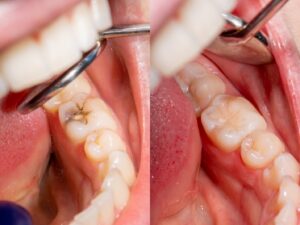
Dental fillings are a common restorative treatment for repairing teeth damaged by cavities. They restore the tooth’s structure, protect it from further decay, and help you chew comfortably. However, fillings don’t last forever. Let’s discuss the life of a dental filling: what they’re made of, how that affects their lifespan, and how to recognize that you need a new one.
How Long Do Different Types of Dental Fillings Last?
The material your dentist uses can significantly affect how long your filling remains functional. Here are some common options and their expected lifespans.
Composite Resin Fillings
These tooth-colored fillings are popular because they blend naturally with surrounding teeth. They typically last about 5 to 10 years, although some can last longer with proper care. Composite fillings are generally best suited for small to medium-sized restorations.
Amalgam Fillings
Made from a mixture of metals, including silver, tin, and copper, amalgam fillings are known for their strength and durability. They often last 10 to 15 years or longer, making them a common option for restoring back teeth that experience significant chewing pressure.
Gold Fillings
Gold is extremely durable and resistant to wear. Although less commonly used today, gold fillings can last 15 to 30 years or longer with proper maintenance. Their higher cost and noticeable appearance may make them less appealing to some patients.
Ceramic Fillings
Ceramic restorations, often made from porcelain, offer a natural appearance and good resistance to staining. They can last approximately 10 to 15 years or longer, depending on their size, placement, and care.
Note that these timeframes are estimates. Your dentist will help you decide which material is appropriate for your needs.
How to Make Your Dental Fillings Last Longer
Good oral hygiene, preventive care, and old-fashioned common sense can help extend the life of your fillings.
Start with good at-home habits. Brush and floss your teeth every day, and it wouldn’t hurt to rinse with mouthwash to aid in the fight against harmful bacteria. On top of your own daily hygiene, it’s also recommended you see a dentist once every 6 months for a checkup and professional cleaning.
Don’t subject your teeth to too much sugar or excessive force. Take it easy on the Halloween candy and avoid chewing on ice, hard candy, and pens. Don’t use your teeth as tools; keep something handy to open packages, tear tape, and open bottle caps.
How Do You Know When a Filling Needs Replacing?
Fillings can become worn, cracked, or loose over time. Warning signs include tooth sensitivity, pain when biting, rough edges, visible cracks, or pieces of filling material breaking away. Sometimes, however, a filling can deteriorate without causing noticeable symptoms.
Your dentist can examine your restoration and use dental X-rays when appropriate to check for decay beneath or around the filling.
Replacing a damaged or aging filling before it causes more extensive problems can help preserve your natural tooth. If you experience discomfort or suspect a filling is failing, schedule a dental appointment.
About the Author
Dr. Britta Lundgren is a Wilmington-based dentist with a degree from the prestigious Tufts University School of Dental Medicine. After graduating, she spent 3 years in Germany training under experienced prosthodontists and practiced for 8 years in North Carolina before opening Lundgren Dental. Along with her friendly, knowledgeable staff, Dr. Lundgren offers a comprehensive menu of dental services in a coastal-themed practice stuffed with comfort amenities. Contact us online to request an appointment or call (910) 777-5023.