
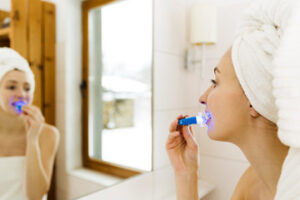
A lot of folks want a brighter smile, and it’s easy to understand why. With social media filled with whitening hacks and countless over-the-counter products promising dramatic results, do-it-yourself (DIY) teeth whitening has become more and more popular. And, yes, some at-home whitening products can be safe when used correctly, but many DIY methods found online can do more harm than good.
Before trying a home remedy, it’s important to understand the potential risks and why seeing a dentist for professional teeth whitening may be your best course of action.
Not Every Whitening Method is Safe
The internet is full of suggestions for whitening teeth using ingredients like lemon juice, baking soda, activated charcoal, hydrogen peroxide, or apple cider vinegar. While these methods may seem inexpensive and convenient, they are not backed by strong scientific evidence and can actually damage your teeth.
Acidic substances like lemon juice and apple cider vinegar can erode tooth enamel, and once enamel is lost, it can’t grow back. This can leave your teeth looking (ironically) more yellow as the underlying dentin becomes more visible.
DIY Whitening Can Increase Tooth Sensitivity
Many people who use DIY whitening methods experience more sensitivity in their teeth. Using abrasive materials or excessive amounts of whitening agents can irritate the teeth and gums, making hot, cold, or sweet foods uncomfortable to eat.
Some people also assume that using whitening products more frequently will produce faster results, but the truth is that overuse can increase sensitivity without significantly improving the shade of your teeth.
You May Damage Your Gums
Improper use of whitening products can also irritate or burn the soft tissues of your mouth. Whitening gels that are too strong or applied incorrectly may come into prolonged contact with your gums, causing soreness or inflammation.
Professional whitening treatments are carefully designed to protect your gums while whitening your teeth safely and effectively.
DIY Methods Don’t Address the Cause of Stains
Not every type of tooth discoloration responds to whitening. Some stains are caused by aging, medications, trauma, or dental restorations like crowns and fillings, which whitening products are unable to lighten.
Attempting repeated DIY treatments without knowing the cause of discoloration may waste time, increase the risk of damage, and still leave you dissatisfied with the results. A dentist, however, can identify the source of staining and recommend the most effective cosmetic solution.
Professional whitening treatments use proven materials, customized treatment plans, and careful supervision to produce brighter, more predictable results while minimizing sensitivity and protecting your oral health. When it comes to your smile, choosing a safe and effective approach is always worth it.
About the Author
Dr. Britta Lundgren personally understands the importance of cosmetic dentistry after her own transformative experience with braces as a teenager. Her confidence bloomed and, thus, her career path as a dentist was set. She graduated from the prestigious Tufts University School of Dental Medicine and spent 8 years practicing in North Carolina before opening her boutique dental practice in Wilmington. Dr. Lundgren has advanced expertise in cosmetic dentistry, specializing in teeth whitening, veneers, and Invisalign treatment. She’s the perfect candidate to help you if you’d like to brighten your smile. Book an appointment online or by calling (910) 777-5023.